Unless your facility is a hermetically sealed lab, its dimensions and design will not remain static over time. Production increases, new equipment comes online, processes change, buildings expand. What some may not expect is that the control system architecture made for the facility in its existing state will not accommodate expansion. Adding equipment or increasing operations becomes far more complicated and expensive than it should be to begin with because the control architecture was not made for growth.
This isn’t to say that one can see the future; this is to say that systems are designed to have enough leeway that standard growth does not require a complete do-over. The difference in cost and functionality for years to come is huge between a system made to grow or one made to fight it.
Why Starting Over is So Expensive
When the control system’s accommodation is maximized, ugly compromises must be made. Complete replacement systems mean shutdown, thousands of dollars spent to throw away what’s already been in place and general chaos. Solutions to work around limitations create cobbled-together, unreliable systems that are difficult to maintain.
When a control system is designed specifically to the needs at hand, it rarely lasts until the expected time frame because one assumes best-case scenarios. Main controller no longer has sufficient I/O. Networking communication channels become congested. Power supplies lack the ability to accommodate additional loads. Instead, to expand, one must either incur the costs of necessary upgrades or suffer with systems that barely function.
From the outset, getting an appropriate control systems design means structuring the systems with enough I/O, networking, and power supply capacity that expansion does not mean useless redesign. It saves the time and money associated with shut-down production and excess change orders.
Building in Capacity that Matters
Excess capacity does not mean providing terminals on the control system that were never going to be used anyway. It means allowing capacity throughout—power supplies, networking, capacity in panels and cable paths—because the moment one area is overcapacity, it halts everything.
For example, the microprocessor/controller must have enough I/O surplus for expansion beyond what it is programmed for at the start. Still, expansion also requires processing and communication capability for added components. Saving costs on the controller’s initial capabilities usually requires its complete replacement for expansion stages.
For networking, there must be sufficient bandwidth for devices and information above and beyond what exists today. Control networks with enough I/O for onsite machinery usually cannot accommodate communications once additional machines are added. Sufficient headroom prior to this point avoids collapse.
Similarly, power distribution with control systems needs a supply greater than what’s needed for today. Overloaded circuits upon installation means electrical connections must be upgraded once capacities are met. Initial savings do not require this basic comprehension.
Modular Systems Vs Monolithic Lockdown
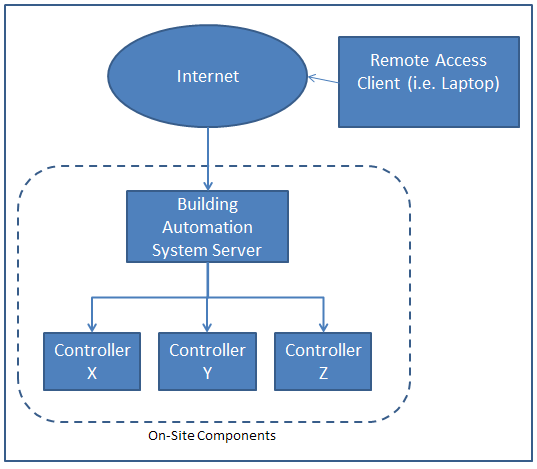
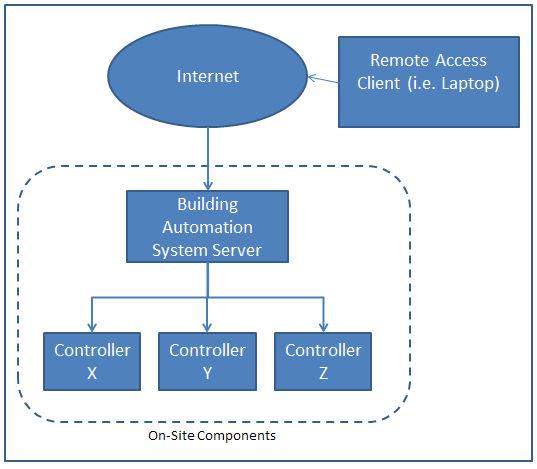
Architecture made of modular sections allows for growth far easier than monolithic designs. Instead of one power microprocessor like it’s an octopus microprocessor with one head and all tentacles managing every system, a distributed system allows for individual controllers and processors to communicate effectively. Should larger systems be needed down the line, they can easily be spliced in as microcontrollers.
This allows for increased reliability; if one controller fails, only that section is down, not the entire facility. It also makes maintenance easier as parts are less individualized for larger components.
Panel space matters more than people realize. Control panels that are packed full do not allow interconnectivity once systems grow. Control panels that spare minimal addition space for future expansion seem wasteful up front but save exponentially on rear-end services should the need arise. Adding components is easy when there are spare parts; retrofitting panels because they’re jammed is expensive.
Networking Flexibility
Control networks need architecture that accounts for growth; star topologies that connect to a single source hit a wall quickly. A ring topology or mesh topology can grow based on nodes added, but only if expansion occurs sequentially rather than from all sides at once.
Networks must be segmented logically to improve area independence; when process areas access their networks but connect back to a distribution network, for example, additional components in one area do not limit I/O access in another.
IP-based control networks are much more flexible than proprietary protocols; standard networking components offer easier access than those designed for specific needs which usually require unnecessary vendor lock-in.
Anticipating Future Unknowns
There’s no guarantee what new equipment will look like in 5-10 years; however, we can project that similar equipment will be purchased and installed. Systems can be designed to accommodate additional similar equipment—even if specifics are unknown.
This means communicating protocols need to be standardized with what most machines will allow; it requires I/O and programming capacity for additional machines; it also means networks must account for more equipment without significant degradation of performance.
Cable paths and conduits need appropriate ceilings for future cabling; running conduit with excess free space costs little to no money up front more than it’s worth after the fact of adding free space mid-project; the same goes for cable trays—extra width costs inexpensive cents per square foot instead of large dollars down the line when nothing can budge.
Software and Programming Hierarchies
Well-structured control programs with sections built in prevent starts from scratch when expanding; when there are logical pieces and standardized routines to common functions required only during programming stages, adding additional equipment becomes easy over convoluted program structures difficult to retrofit.
Documentation matters most when aspects need retrofitting; if there’s no documentation on changed code or wiring systems, there’s no accountability. Facilities assume these adjustments are minor but end up drowning when they cannot change anything because they lost accountability.
Licensing matters—some control software charges per I/O point or by controller which severely limits expansion; understanding what will incur fees prior to initial setup either lets clients know what they can afford or what won’t meet their needs down the line.
When Growth Diversifies
Even with careful planning, facilities sometimes grow differently. Having flexible architecture offers more accessibility than if it’s rigidly set up to serve functional blocks instead of layout. Layouts generally change often but setup should accommodate various changes without hindrance.
Remote I/O that can be attached anywhere in a network gives placement flexibility instead of returning remotely back to a central panel where all wires must go; remote I/O positions next to existing components make acquiring changes easier.
The Cost-Benefit Reality
Planning control systems that accommodate growth inevitably spends more than planning systems which only adequately meet current needs; however, the expense difference is nominal compared to what it costs for retrofitting and system replacements down the line—it’s essentially buying insurance against future incapacity.
Facilities that want to stay static forever need these accommodations; however, most operations change over time; facilities stuck with control systems due to exclusion from innovation become anchor-expensive dead weights limiting ongoing possibility.
The goal is to create enough excess capacity and flexibility without over-engineering systems for options that will never exist. This requires understanding of current necessity and viable expansion options.
Making It Work
To appropriately integrate control systems that grow in efficiency requires collaboration from those who understand both current setup and future possibilities; if systems are designed without operational aware perspective then the system is either incapable of meeting initial needs or it’s wasting tons of money from capacity it never needed.
Control designers who’ve seen a multitude of facilities grow have knowledge of pitfalls—they’ve seen what expansion typically needs and what works well versus what’s merely a waste of time once installed.
The time to think about this is during initial planning or major renovation—not after something’s installed and limitations become clear. It’s easy to compromise after inception but control system architecture isn’t easily changed after going in—all parts need integrated from conceptual inception first so money isn’t wasted by frustration later on.